
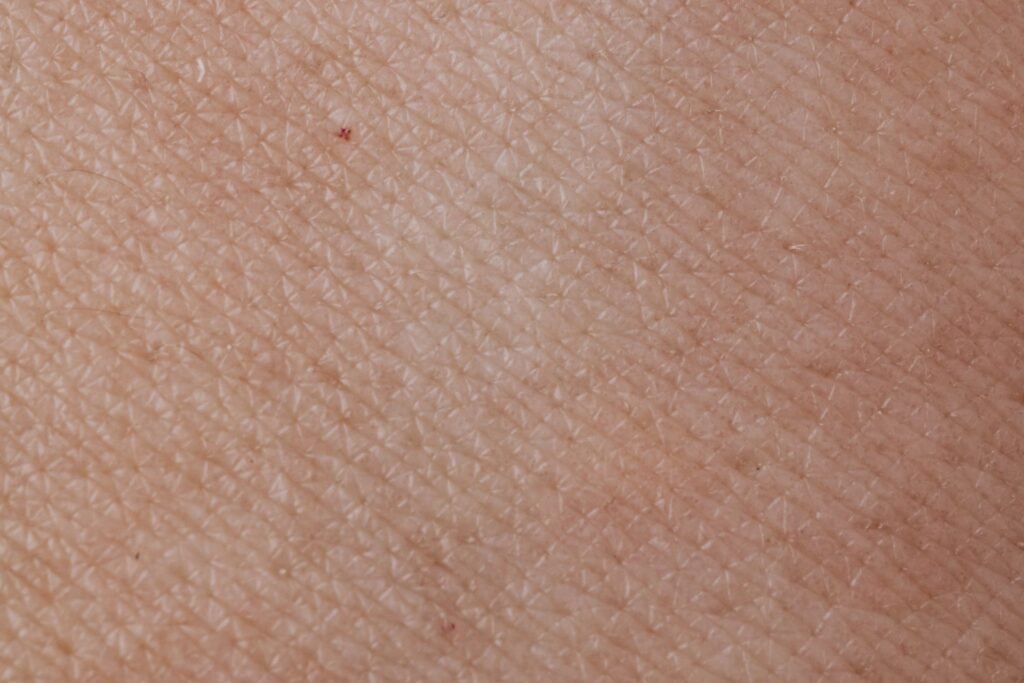
If your skin has turned a little unpredictable lately — stinging at products you’ve used happily for months, flushing for no clear reason, dry in some spots and breaking out in others — it’s worth pausing before you reach for yet another product. These are classic signs of a stressed skin barrier, and the fix is usually gentler and simpler than you’d think.
A quick reminder of what we’re talking about: your skin barrier is the outermost layer, where skin cells sit in a “mortar” of protective lipids, topped by a slightly acidic film. When it’s intact, skin feels calm and holds onto moisture. When it’s worn down, water escapes and irritants get in — and that shows up in fairly recognisable ways. (For the full picture and the repair routine, our complete barrier-repair guide goes deeper.)
The 8 signs to look for
You don’t need all of these — two or three appearing together is usually enough to suspect your barrier needs care.
- Tightness after cleansing. That “clean” squeak is often a warning, not a win. Healthy skin shouldn’t feel tight and uncomfortable after washing.
- New or increased sensitivity. Products that were fine for ages suddenly sting, burn or tingle. Dermatologists note this is a hallmark sign — the barrier is too vulnerable to tolerate what it used to (Healthline; PMD Beauty, 2025).
- Redness and blotchiness. Persistent flushing, warm patches, or uneven red areas that don’t settle.
- Flaking and rough texture. Dry, papery patches — often around the nose and mouth — and a rough feel rather than smooth.
- Dehydration that moisturiser won’t fix. You keep applying, but skin still feels parched, because the barrier can’t hold the water in.
- Breakouts alongside dryness. A compromised barrier can trigger irritation-related bumps and extra oil as the skin overcompensates — so you get spots and dryness at once (Tune and Thrive, 2026).
- A tight, waxy “glow.” Tricky, this one — over-exfoliated skin can take on a shiny, taut texture that’s easily mistaken for healthy radiance (Healthline).
- Stinging from gentle products. If even a basic moisturiser or hydrating serum stings, that’s the barrier in real distress — the strongest signal to stop everything active and simplify.
What usually causes it
More often than not, barrier damage is the result of trying too hard, not neglect: over-exfoliating, layering several strong actives at once, harsh foaming cleansers, and hot water. In India there’s an extra layer of everyday stress too — mineral-heavy hard water, heat, and pollution all chip away at the barrier on top of whatever your routine is doing. We set out that wider environmental picture in why your skincare doesn’t work in India.
How to repair it (gently, and it does heal)
The good news is that the barrier is built to recover. The approach is mostly about subtraction:
- Pause all actives. Stop exfoliating acids, retinoids, scrubs and strong treatments while skin recovers.
- Cleanse gently, once or twice a day. Mild, fragrance-free, pH-respecting. Lukewarm water, never hot.
- Hydrate and soothe. Humectants like hyaluronic acid and glycerin, plus barrier-supporting ingredients such as ceramides, panthenol and squalane, calm and rebuild (PMD Beauty, 2025).
- Protect by day. A gentle broad-spectrum SPF — a damaged barrier is more vulnerable to UV, and skipping protection slows healing.
- Give it time. Mild damage often calms within one to two weeks; more stubborn cases take two to four weeks or longer (My Medicine Advisor, 2026). Consistency matters more than speed.
Once skin feels comfortable again, reintroduce actives slowly — one at a time, a couple of times a week — rather than returning to a crowded routine all at once.
When to see a professional
If your skin stays raw, inflamed or reactive despite a calm routine for several weeks, or if you have a condition like eczema or rosacea, please see a dermatologist. Some barriers genuinely need medical support, and that’s not a failure — it’s the smart next step.
We’re building pH Matter around barrier-first, climate-aware formulas with exactly this in mind. If you’d like a note when they’re ready, you’re welcome to leave your email — no spam, just the science as it comes.
FAQ
What does a damaged skin barrier feel like?
Often tight after washing, newly sensitive or stinging, red or blotchy, flaky or rough, and dehydrated despite moisturiser. Breakouts can appear alongside the dryness. Two or three of these together suggest a compromised barrier.
Can a damaged skin barrier heal on its own?
Yes. With a gentle, simplified routine, mild damage often calms in one to two weeks and more stubborn cases in two to four weeks. The barrier is designed to rebuild itself when you stop overwhelming it.
What should I stop using if my barrier is damaged?
Temporarily pause exfoliating acids, retinoids, scrubs, strong actives, harsh foaming cleansers and hot water. Reintroduce actives slowly once skin feels calm.
Why do I get both dryness and breakouts?
A compromised barrier can’t hold moisture and can trigger irritation-related bumps and extra oil as skin overcompensates — so dryness and breakouts show up together.
Does hard water damage the skin barrier?
It can contribute. Mineral-heavy, alkaline hard water shifts skin’s pH the wrong way and leaves residue, adding daily stress — a real factor in many Indian cities.
Written by the pH Matter Editorial team. Educational only, and not a substitute for a dermatologist’s advice — especially for eczema, rosacea or persistent reactions.