
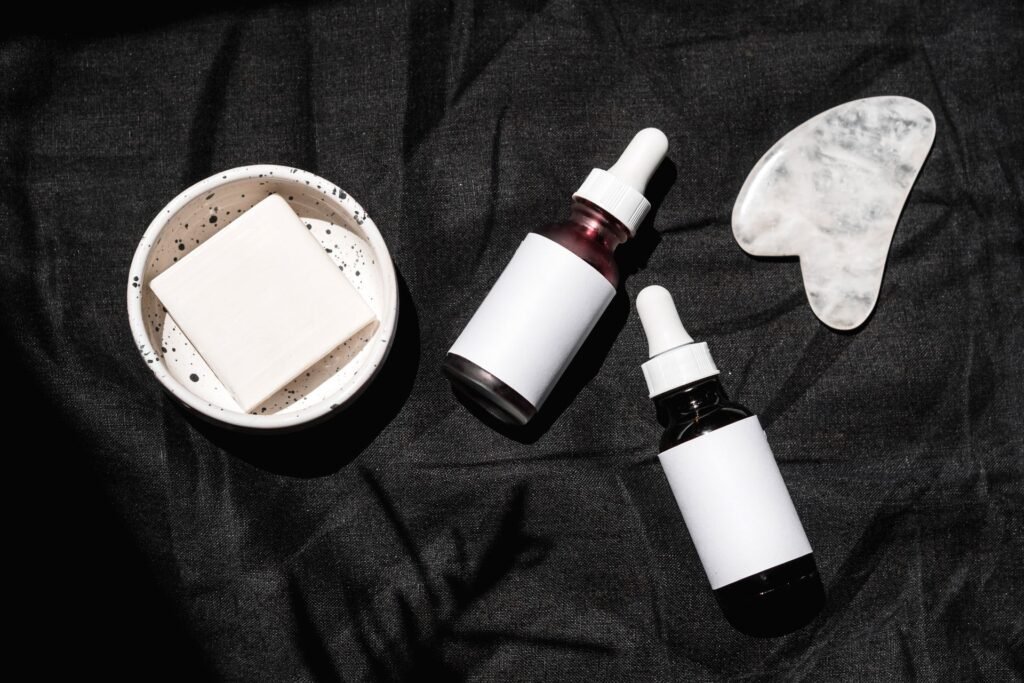
Here’s an uncomfortable possibility worth sitting with: if your skin has been getting worse the harder you work at it, your routine might be the cause rather than the cure. It’s one of the most common patterns there is — and one of the most fixable.
We call it skin fatigue: a barrier worn down and quietly inflamed, not from neglect, but from too much care. Too many strong actives, too much exfoliation, too often. The instinct when skin acts up is to add another step or scrub a little harder. Unfortunately, that’s usually exactly what tips it over.
How over-care wears skin down
Exfoliation and active ingredients are genuinely useful — in moderation. The trouble starts with frequency and stacking. Over-exfoliating strips the outer layer (the stratum corneum) faster than skin can rebuild it, which increases transepidermal water loss, disrupts the skin’s microbiome, and triggers a low-grade inflammatory cycle that paradoxically worsens the very things you were trying to fix. As dermatologists note, a compromised barrier can then make acne more inflamed, redness flare, and pigmentation darken rather than fade (Westlake Dermatology, 2026).
It’s rarely one product. More often it’s the quiet accumulation: an exfoliating cleanser, plus an acid toner, plus a retinoid, plus a vitamin C, plus a weekly scrub — each reasonable alone, overwhelming together. Dermatologists increasingly report treating people for reactions linked to at-home over-exfoliation and viral skincare trends — it’s become one of the more common skin problems they see from simply doing too much.
The signs of skin fatigue
They overlap with a damaged barrier (the two are really the same story): tightness, stinging at products that used to be fine, redness, flaking, breakouts arriving with dryness, and that deceptively tight, waxy “glow” that can be mistaken for radiance. Dermatologists describe a useful red line — if even your moisturiser stings, the barrier is in real distress and it’s time to stop everything active (PMD Beauty, 2025). Our piece on the signs of a damaged barrier goes through these in detail.
How much exfoliation is actually right?
Far less than most routines assume. A widely cited dermatology guideline is roughly once or twice a week for most people — and some skin, with a good routine, barely needs it at all (Healthline). A few principles help:
- One active at a time. Don’t layer retinol with acids on the same night. Combining strong actives is a leading cause of at-home chemical burns.
- Gentler suits Indian conditions. Heat, humidity and hard water already stress the barrier, so an aggressive routine has less margin here. We set out that backdrop in why your skincare doesn’t work in India.
- Match method to skin. Sensitive or dry skin generally does better with mild chemical or enzyme exfoliation than with gritty physical scrubs.
Letting skin recover
The recovery routine is mostly about stopping:
- Pause all exfoliation and actives for two to three weeks — acids, retinoids, scrubs, the lot.
- Cleanse gently with a mild, fragrance-free, pH-respecting cleanser; lukewarm water only.
- Rebuild with calming, barrier-supporting ingredients — ceramides, panthenol, squalane, and humectants like hyaluronic acid and glycerin (PMD Beauty, 2025).
- Wear SPF daily, since fatigued skin is more vulnerable to UV.
- Reintroduce slowly. Once skin is calm, bring back one active, a couple of times a week, and watch how skin responds before adding anything else.
The hardest part is psychological — resisting the urge to “do something” while skin heals. But doing less, consistently, is the something.
The bigger lesson
A lot of skincare culture sells more: more steps, more actives, more potent percentages. For a barrier that’s already coping with a demanding climate, more is often the problem. A short, well-chosen routine your skin can actually tolerate will almost always outperform a maximalist one — a theme we pick up in how many products you actually need.
We’re building pH Matter on exactly this principle — fewer, better-chosen ingredients. If you’d like a note when the first formulas are ready, leave your email — no spam, just the science as it comes.
FAQ
What is skin fatigue?
It’s a worn-down, mildly inflamed skin barrier caused by over-care — too many strong actives and too much exfoliation, too often — rather than by neglect. The fix is usually to simplify and let skin recover.
How often should I exfoliate?
For most people, about once or twice a week, depending on skin type and method. Some skin barely needs it. Daily exfoliation or layering multiple acids is a common cause of damage.
Can using too many skincare products damage my skin?
Yes. Stacking strong actives (acids, retinoids, vitamin C, scrubs) can overwhelm the barrier, increasing water loss, disrupting the microbiome, and causing inflammation that worsens acne, redness and pigmentation.
Is it bad to use retinol and acids together?
Usually, yes, on the same night — combining strong actives is a leading cause of at-home chemical burns. Alternate nights, and use one active at a time, especially while recovering.
How long does skin fatigue take to recover?
Often two to three weeks of a gentle, simplified routine, though more stubborn cases take longer. Consistency and patience matter more than any single product.
Written by the pH Matter Editorial team. Educational only, and not a substitute for a dermatologist’s advice for persistent irritation or burns.